Privaatruum
Private Room
Arvatakse, et esimesed postitantsu laadsed praktikad leidsid aset 800 aastat tagasi Indias. Postitantsu praktikat aitas populariseerida Elvis Presley muusikavideo „Jailhouse Rock” ning „Little Egypt” tantsutrupi rändetendused Ameerikas. Esimesed postitantsu stuudiod tekkisid USAs 1990. aastatel. Euroopasse levisid need kümme aastat hiljem.
Praeguseks on postitants arenenud mitmetesse suundadesse alates sportlikust pole fitnessist kuni nüüdistantsu mõjutustega pole art’ini ja hardcore postitantsuni. Striptiisiklubides nähtav tantsustiil meenutab sageli exotic pole stiili, mida tehakse enamasti vähemalt 10 cm kõrgustes platvormkingades ning napis riietuses. Striptsiisiklubi tantsijate diasporaa on väga lai olenemata nende etnilisest taustast, hariduskäigust või sellest kas ja kuidas nad ennast sooliselt ja seksuaalselt määratlevad.
Euroopas on striptiis legaliseeritud ning tantsijatele võimalus rahaliseks iseseisvuseks ja kehaliseks enesemääratlemiseks. Samal ajal rõhutavad tantsijad ja aktivistid, et seda tuleks käsitleda professionaalse ja legitiimse tööna, mis eeldab psühholoogilist ja kehalist vastupidavust, intelligentsust ja oskust navigeerida keerukates sotsiaalsetes olukordades.
Näituse fookus on suunatud stripi- ja seksitöö kogemusele naistöötaja vaatenurgast, olles samas solidaarne kõikide teiste intiimtöö tegijatega. Sellest lähtudes mõtestavad kunstnikud ja kuraator seksitöö rolli ning ühiskondlikke hoiakuid, mis selle tööga kaasnevad.
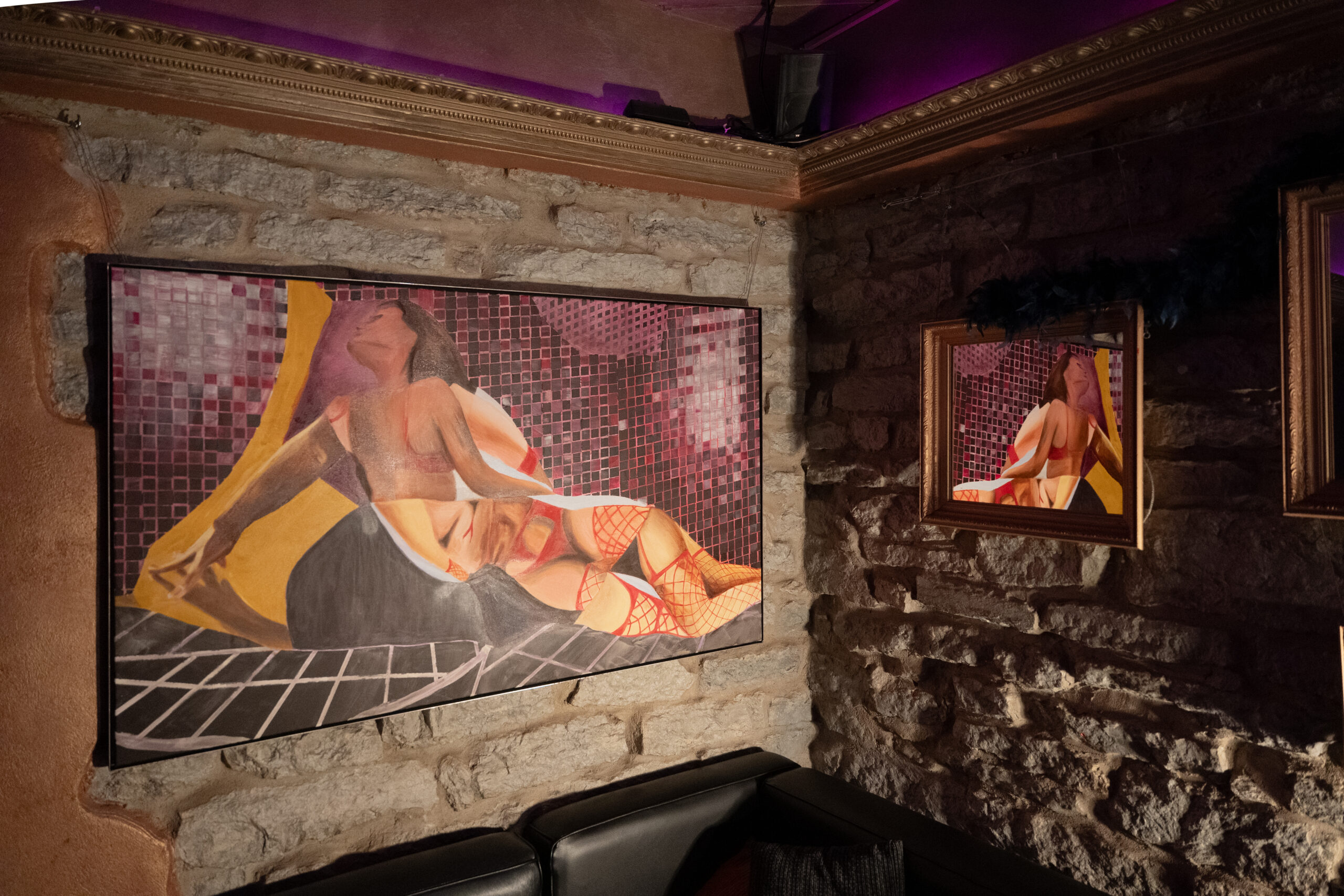
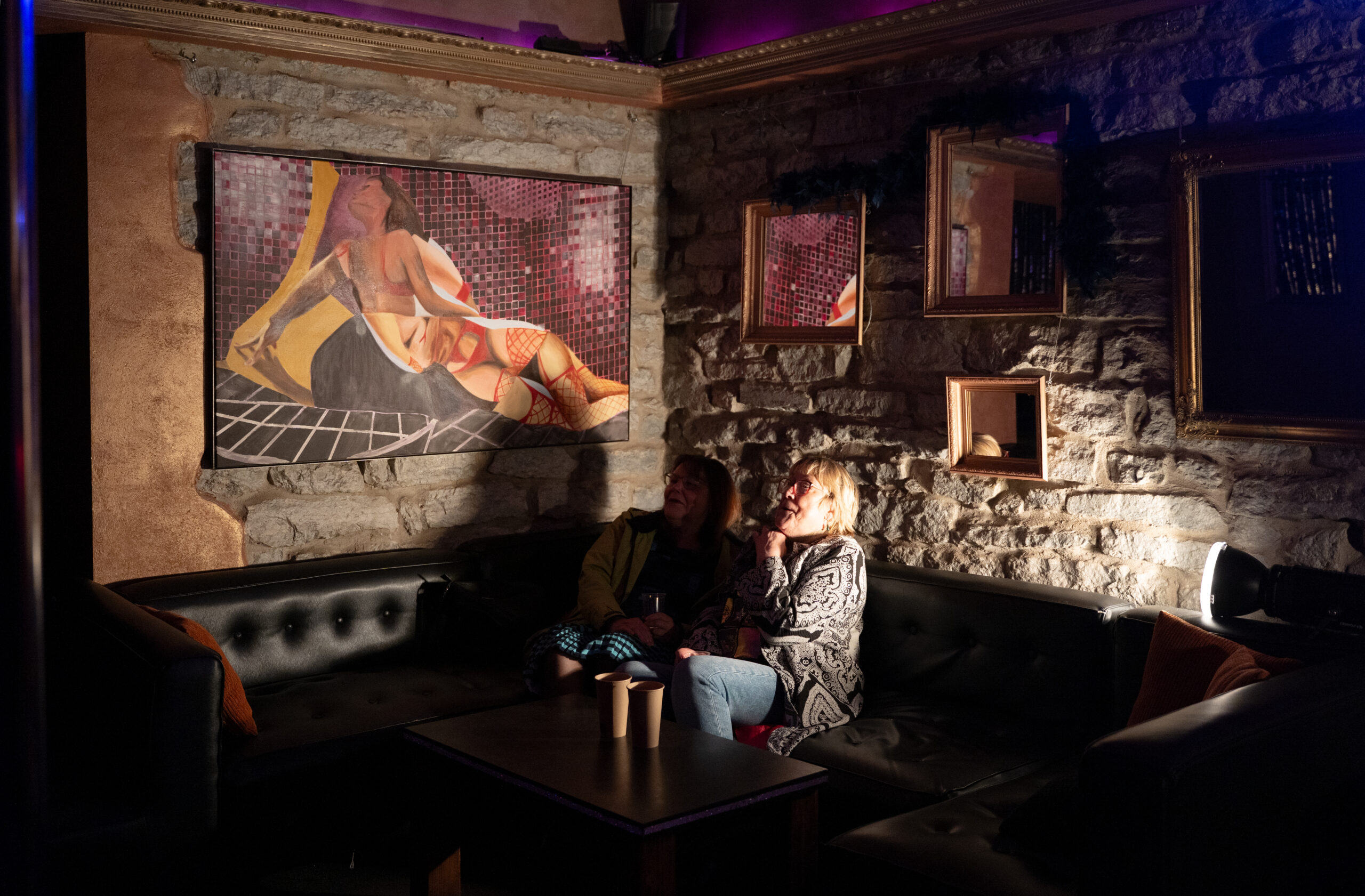
Lisette Lepiku loovuurimuslikud akrüül- ja õlimaalid analüüsivad võimu- ja pilgudünaamikaid seksitöö ja naisakti kujutamisel. Töid tehes uuris ta vaataja ja vaadeldava omavahelisi seoseid toetudes erinevatele maalidele nii 19. ja 20. sajandist kui ka kaasaegsest perioodist. Loovuurimuse eesmärk on seada küsimuse alla traditsiooniline meeskunstniku poolne kujutamisviis, kus vaatajal on võim kujutatava üle.
Maalidel kujutatud subjekt on noor striptiisitantsija. Maaliprotsessi vältel osales kunstnik nii tema igapäevaelus, kui ka tööga seotud tegevustes. Tänu usalduslikule ja turvalisele suhtele tantsijaga avanes kunstnikule võimalus seksitöö süvitsi analüüsimiseks ja kujutamiseks.
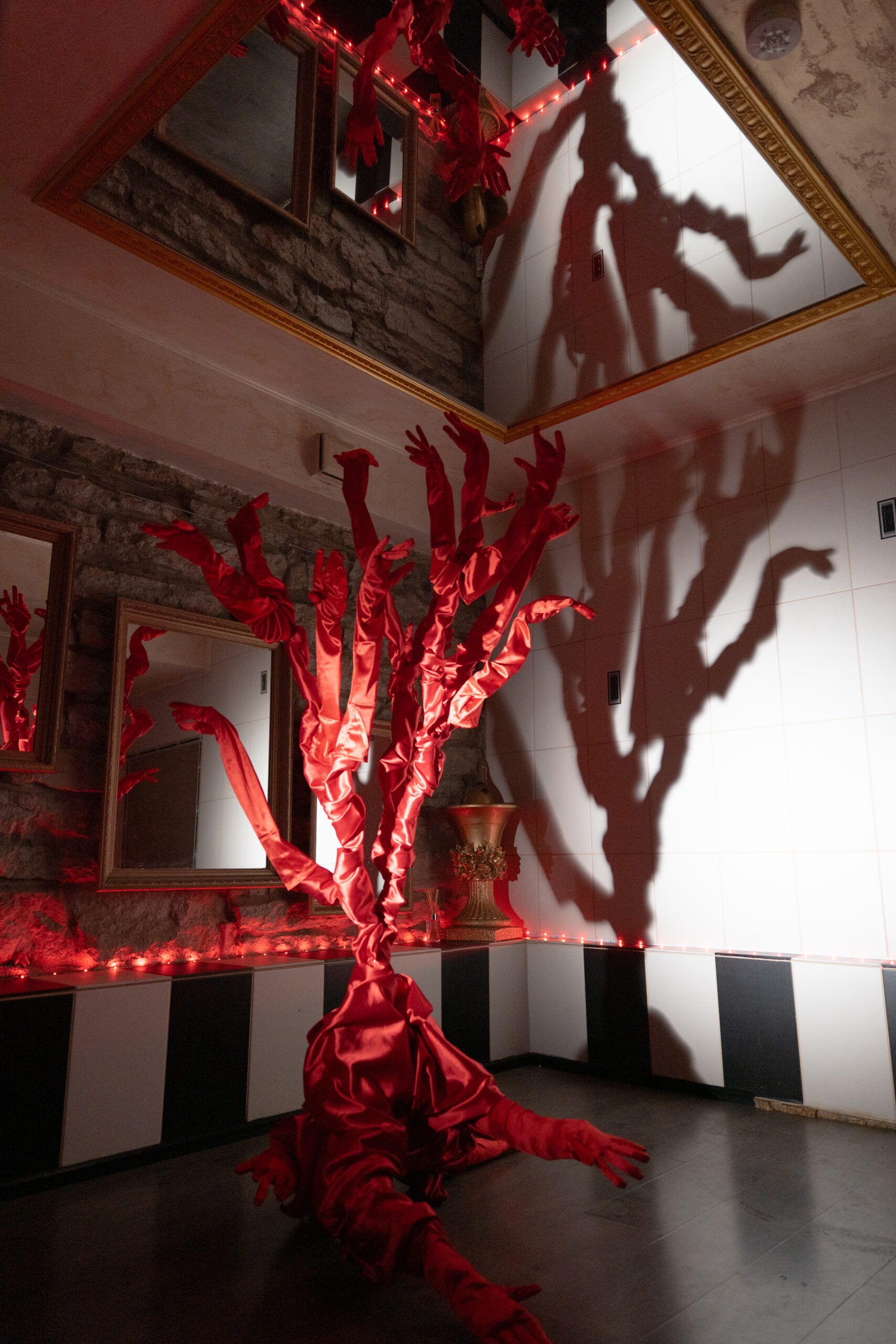
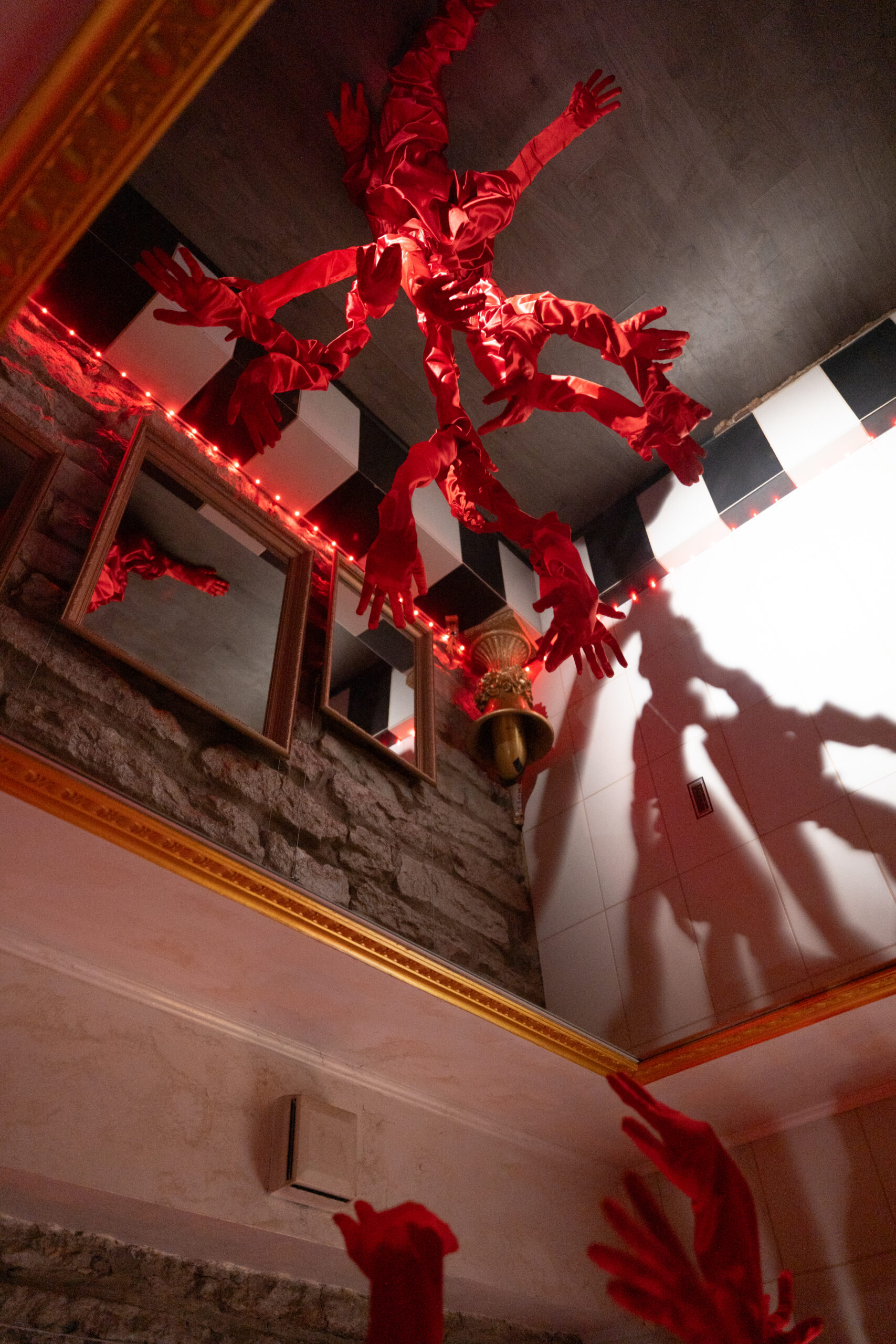
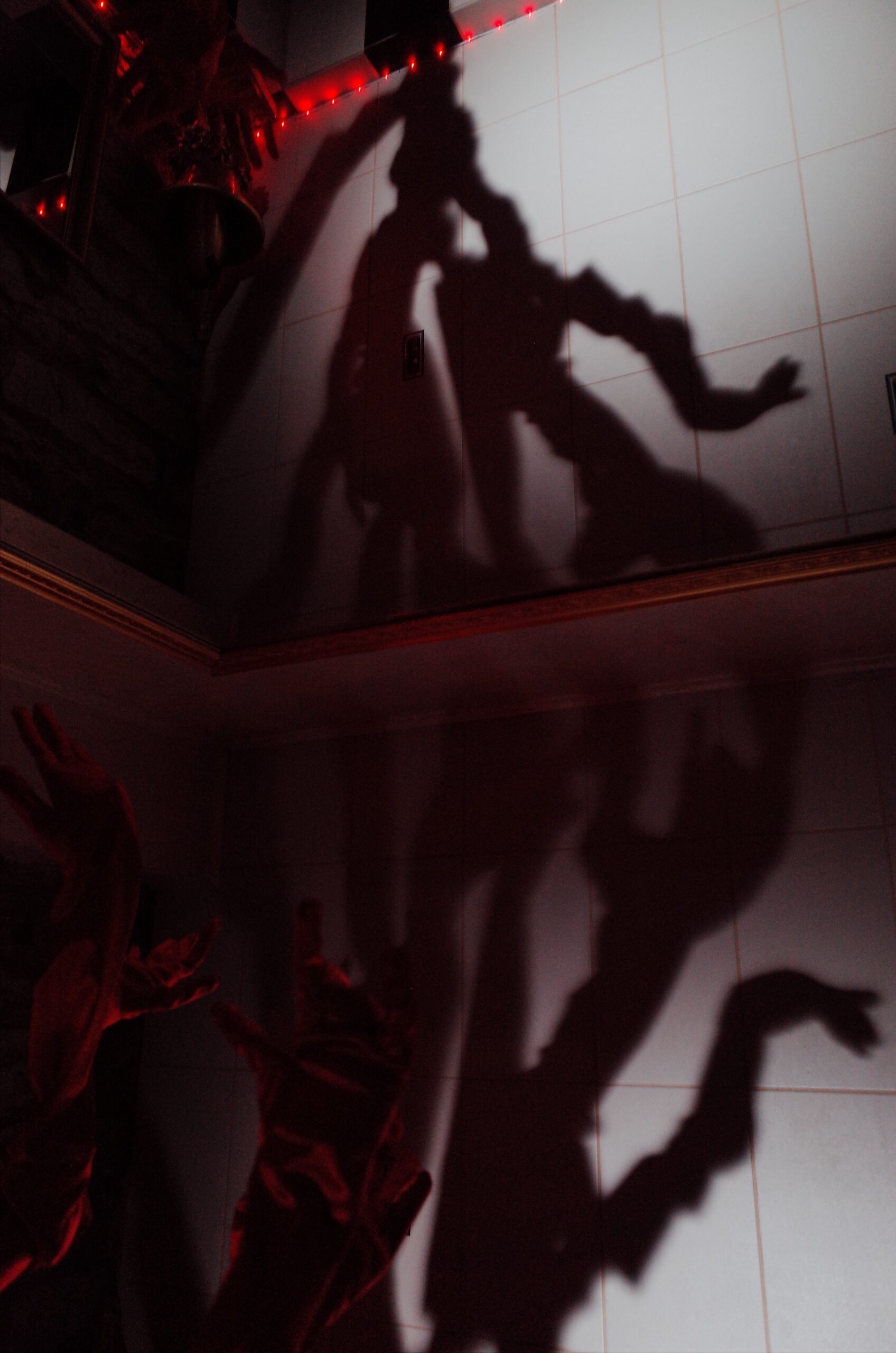
Kristina Kuzemko videoinstallatsioon „No pleasures, Escape room” kujutab noort naist tundmatul unenäomaastikul (ingl.k dreamscape). Tundmatus võib avada meile sügavaid, tihtipeale alla surutud külgi meis endis. Videos kujutatavas dreamscape’is kutsutakse näituse külastajat üles reflekteerima, kust jookseb piir üleküllastumise ning tasakaalu vahel. Installatsioonid astuvad dialoogi klubi olustikuga ning on ühtaegu kriitilised, aga ka empaatilised inimeste tungide suhtes.
Näituse kuraator Kaidi Ojasoo õpib Eesti Kunstiakadeemias magistriõppes ning on lõpetanud Usuteaduse Instituudi hingehoiu erialal. Kuraatori vaatevälja keskmeks on kriiside, inimeseks olemise valude ja rõõmude ning suhtete analüüsimine.
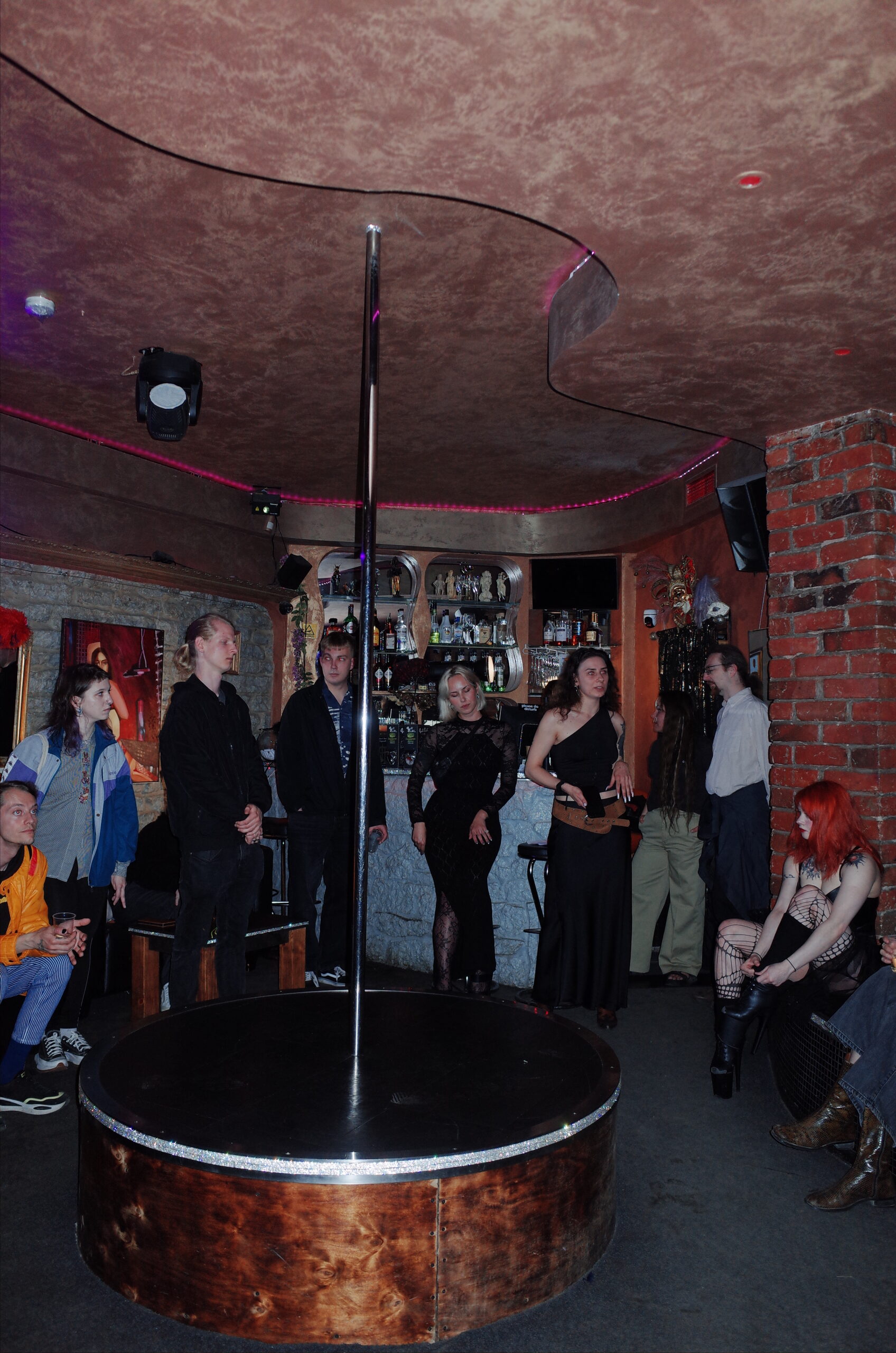
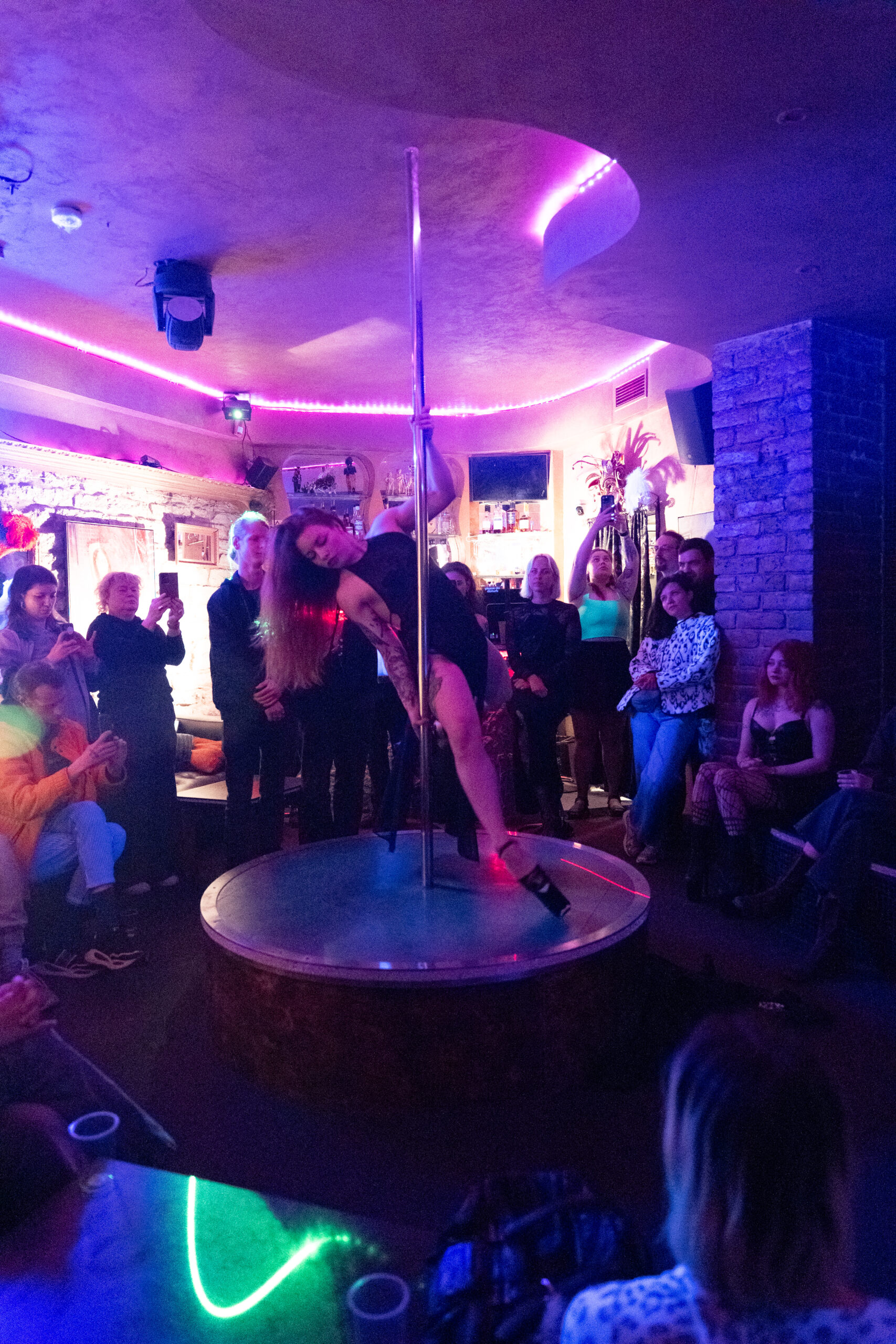
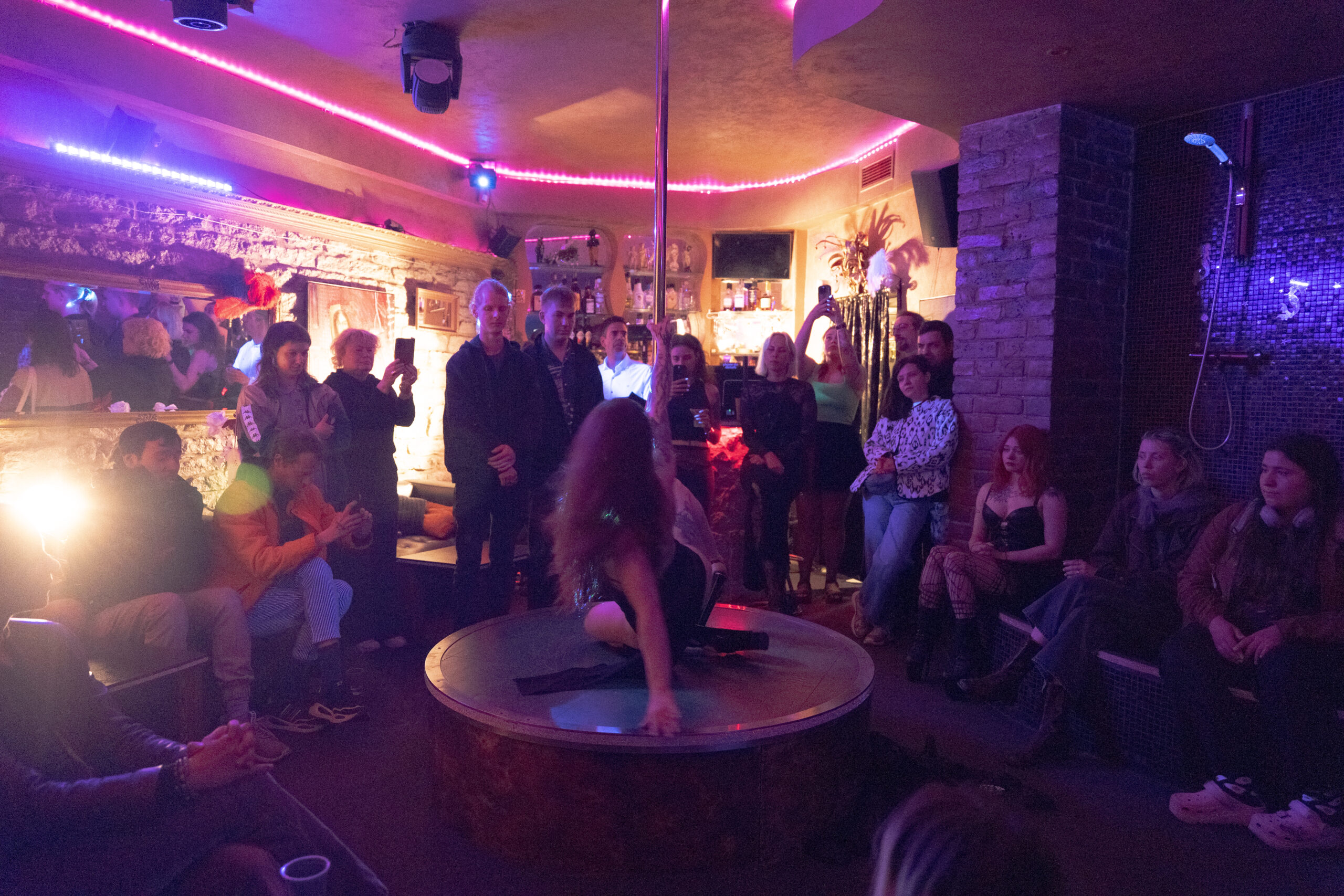
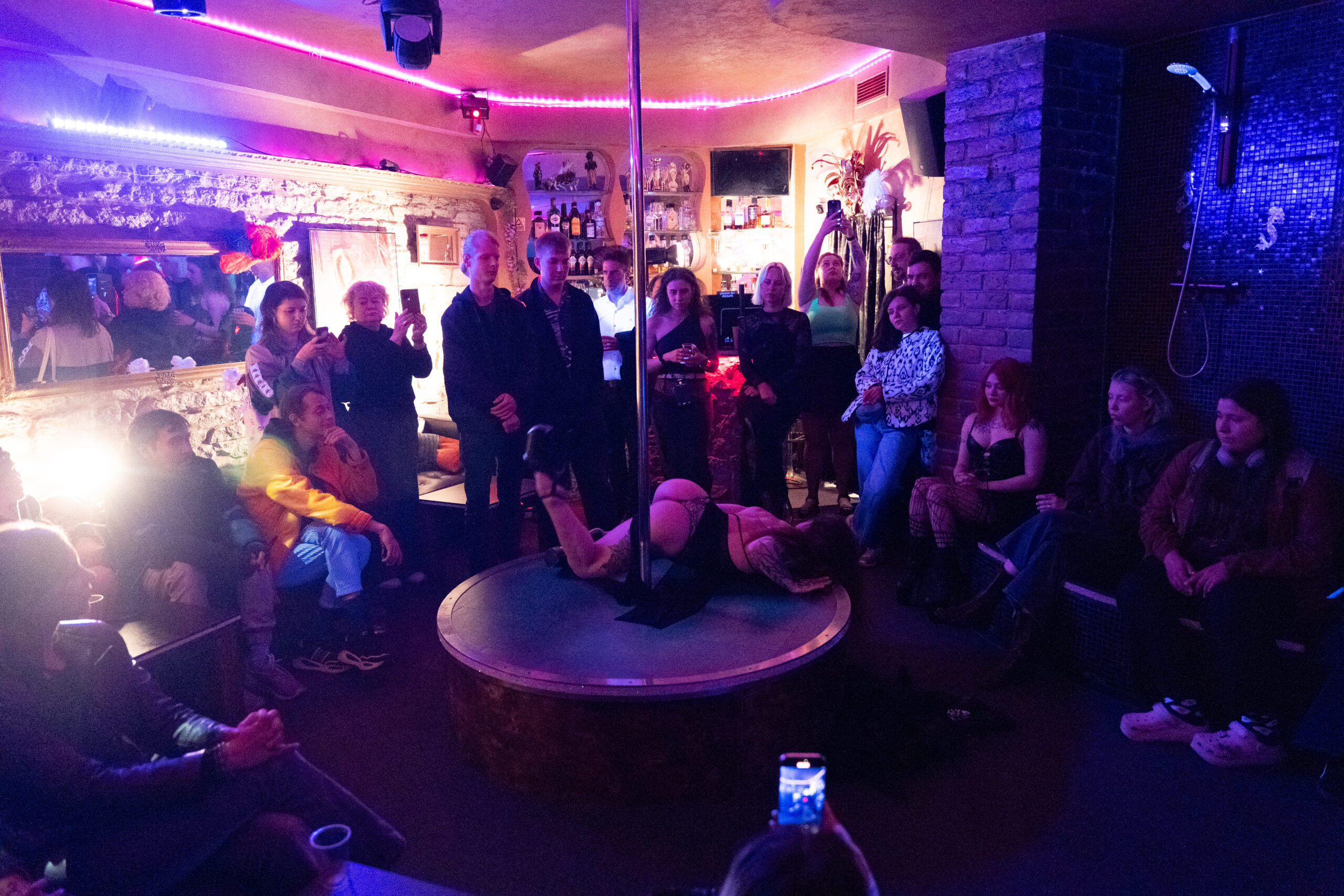
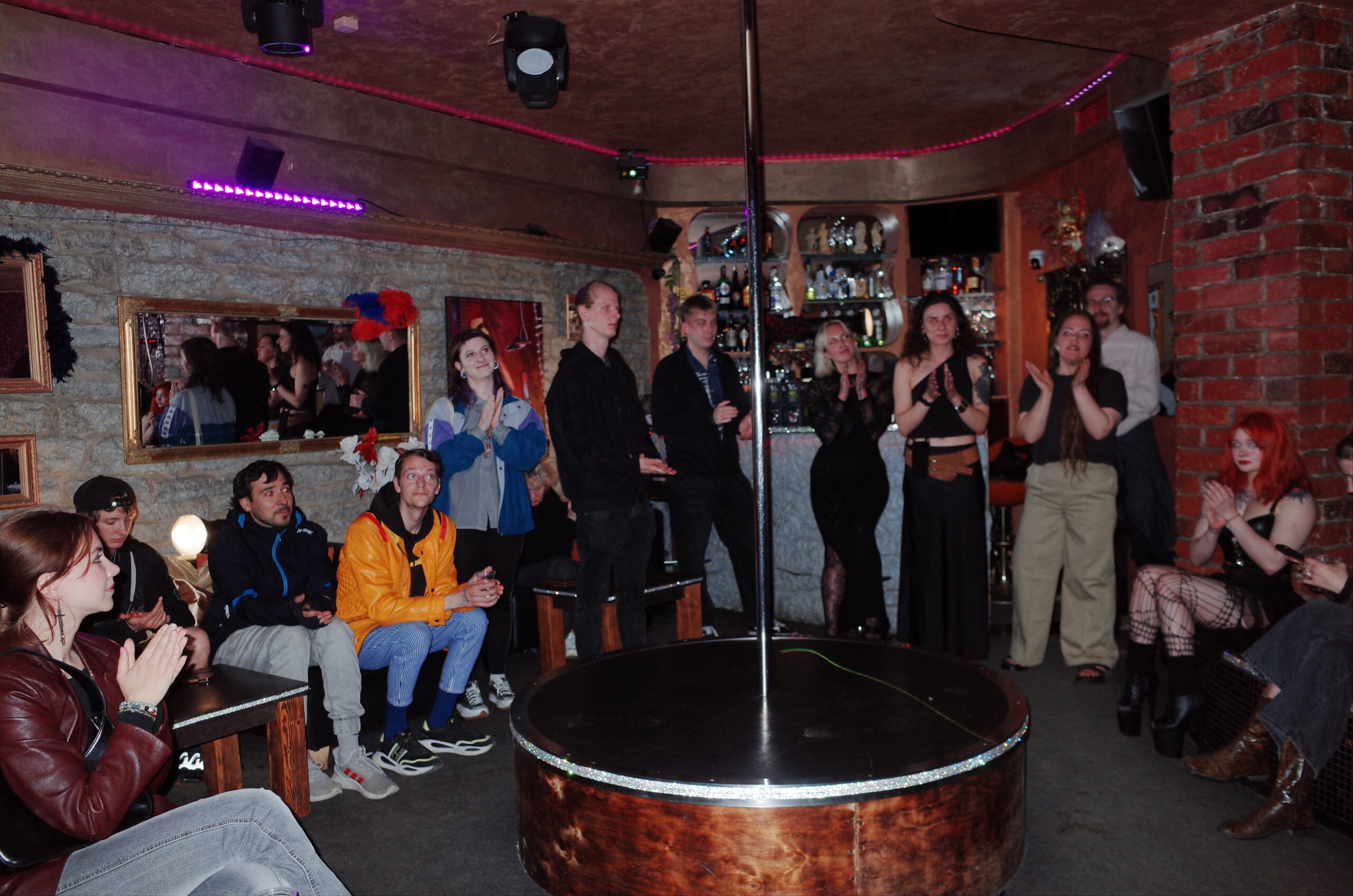
Näituse avamisüritusel astus kunstnike töödega dialoogi performance kunstnik ja postitantsija Diana Harten. Diana Harten on võitnud mitmeid exotic pole tantsukonkursse ning osalenud TANCY NA TNT tantsuvõistlusel. BFM tantsukooli vilistlane ja kaasaegse tantsu praktiseerija Diana armastab oma praktikas kombata kehalisuse piire ja tuua kokku erinevaid tantsustiile.
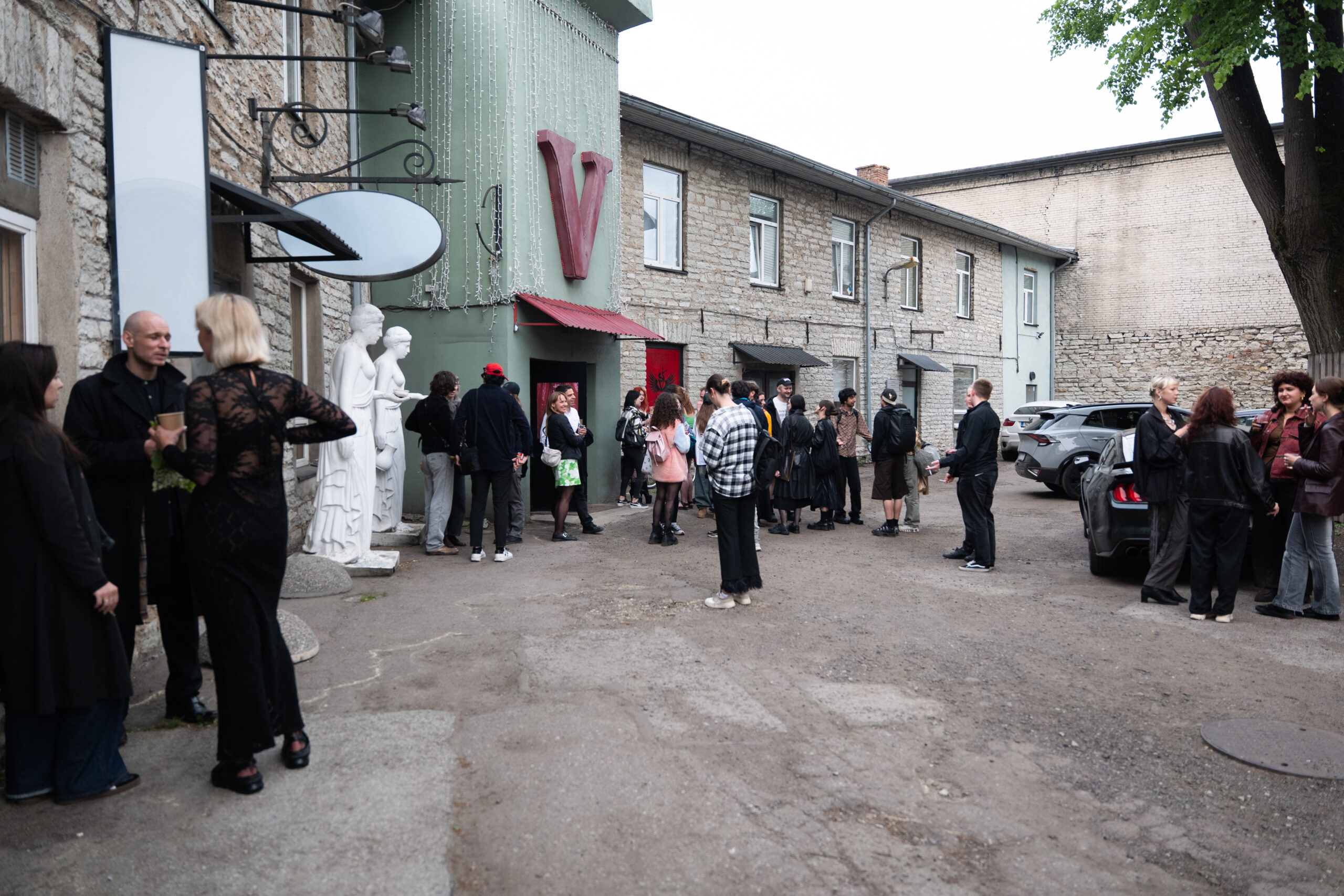
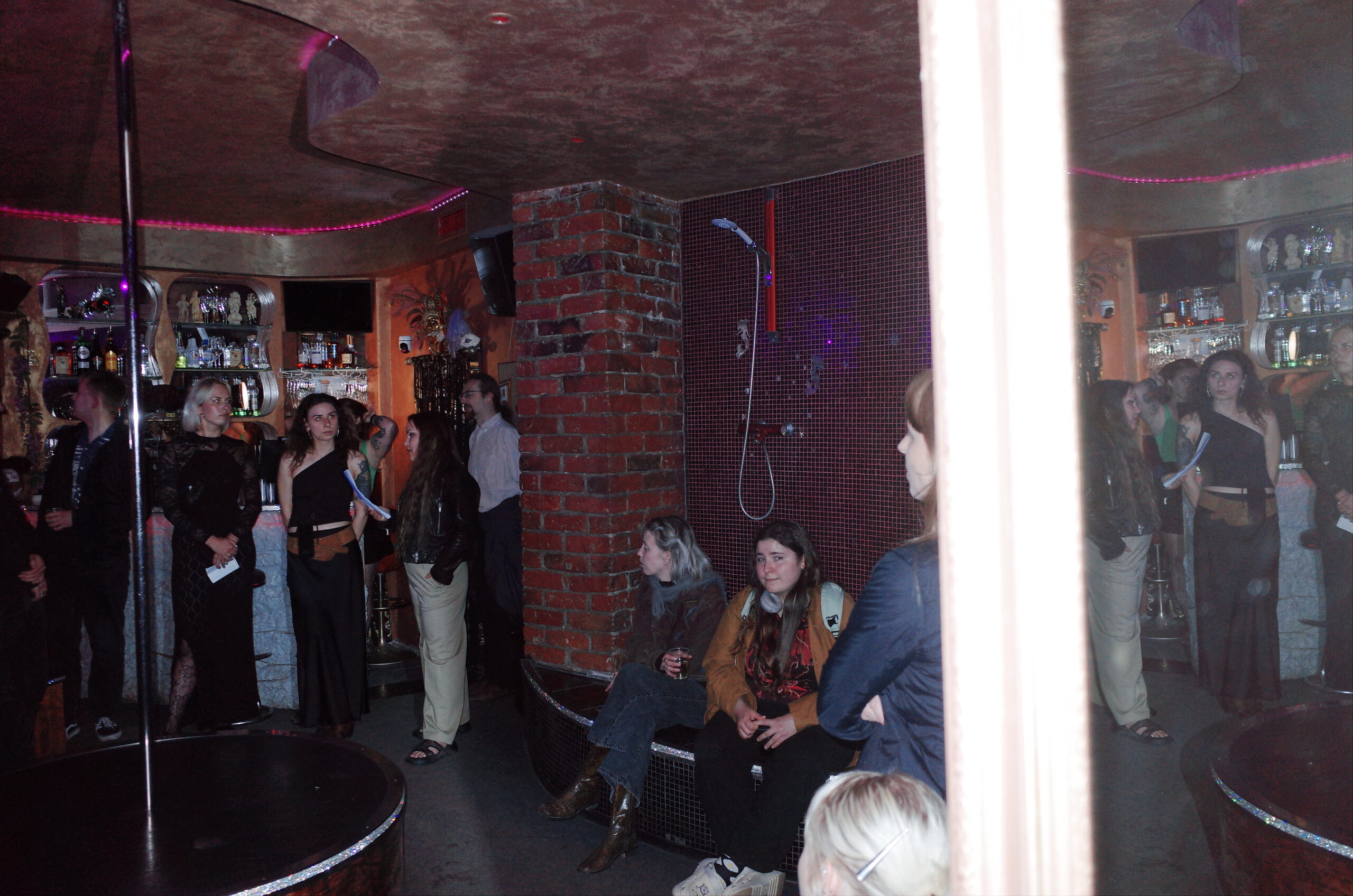
Näitus „Privaatruum’’ toimus 2025. aasta juunis striptiisiklubis Club Virgin ning oli osa Eesti Kunstiakadeemia kuraatoriõppe seminari lõputööst.
Näituse helimaastiku lõi Daniel Raichert ning näitust dokumenteerisid Kristina Kuzemko ja Ben Raybone.
Näitust kajastati Delfi veebiportaalis.
It is believed that the earliest pole dance like practices took place 800 years ago in India. The practice of pole dancing was later popularized by Elvis Presley’s music video Jailhouse Rock and the touring performances of the dance group Little Egypt in America.The first pole dance studios emerged in the United States in the 1990s. In Europe, they appeared about a decade later.
Today, pole dance has developed into several branches, ranging from athletic pole fitness to contemporary dance influenced pole art and hardcore pole dance. The style of dance typically seen in strip clubs often resembles exotic pole style, which is usually performed in platform heels of at least 10 cm and minimal clothing. The diaspora of strip club dancers is vast, regardless of their ethnic background, education, or how they define themselves in terms of gender and sexuality.
In Europe, strip dance is legal, offering dancers an opportunity for financial independence and bodily self-determination. At the same time, dancers and activists emphasize that this should be recognized as professional and legitimate work — requiring psychological and physical endurance, intelligence, and the ability to navigate complex social situations.
The exhibition focuses on the experience of strip dance and sex work from the perspective of female workers, while remaining in solidarity with others in the field. Based on that, the artists and the curator critically examine the role of clients and societal attitudes related to this type of work.
Lisette Lepik’s creative-research based acrylic and oil paintings examine dynamics of power and gaze in the representation of sex work and the female nude. In creating these works, she explored the relationship between the viewer and the viewed, drawing on paintings from the 19th and 20th centuries as well as contemporary art. The aim of the practice-based research is to question the traditional mode of representation by the male artist, in which the viewer holds power over the depicted subject.
The subject portrayed in the paintings is a young striptease dancer. Throughout the painting process, the artist took part in both the dancer’s everyday life and her work-related activities. Through a relationship built on trust and safety, the artist was given the opportunity to analyse and depict sex work in depth.
Kristina Kuzemko’s video installation No Pleasures, Escape Room depicts a young woman within an unfamiliar dreamscape. The unknown can reveal deep, often suppressed aspects within ourselves. In the dreamscape presented in the video, visitors are invited to reflect on where the boundary lies between overstimulation and balance. The installations enter into dialogue with the club environment and are simultaneously critical of, and empathetic toward, human desires.
The exhibition’s curator, Kaidi Ojasoo, is a master’s student at the Estonian Academy of Arts and a graduate of the Institute of Theology’s pastoral care programme. Her curatorial focus centres on the analysis of crises, the pains and joys of being human, and interpersonal relationships.
At the exhibition opening, the artists’ works were placed in dialogue with a performance by an artist and a pole dancer Diana Harten. Harten has won several exotic pole dance competitions and has participated in the TANCY NA TNT dance competition. As a graduate of the BFM Dance School and a practitioner of contemporary dance, Diana explores the limits of corporeality in her practice and brings together diverse dance styles.
The exhibition Private Room took place in June 2025 at the Club Virgin and was part of the final project of the Estonian Academy of Arts curatorial studies seminar.
The exhibition was documented by Kristina Kuzemko and Ben Raybone.
The exhibition was covered on the Delfi website.